



Artificial intelligence is rapidly reshaping the priorities of global education systems. As interest in AI in K-12 education continues to grow, school leaders are increasingly asked how to introduce AI for school students in a way that aligns with long-term academic strategy.
However, sustainable schooling for AI cannot rely on software adoption alone. It requires a structured AI curriculum embedded within a coherent STEM education framework.
In 2026, the most effective schools are not simply introducing AI tools. They are strengthening STEM education pathways so that AI readiness develops progressively over time.
Why AI in K-12 Education Must Be Integrated Into STEM Education
AI is not an isolated subject. It is an applied outcome of strong STEM education.
A structured AI curriculum within K-12 settings should build on foundational STEM competencies, including:
Computational thinking
Logical reasoning
Algorithm design
Structured programming
Systems thinking
When AI in K-12 education is embedded within STEM education rather than introduced separately, schools create continuity across grade levels. Students develop durable competencies that support future AI exploration. This approach ensures that AI readiness becomes a natural extension of STEM education rather than a temporary initiative.
Robotics Kits for Schools as a Core Component of STEM-Based AI Preparation
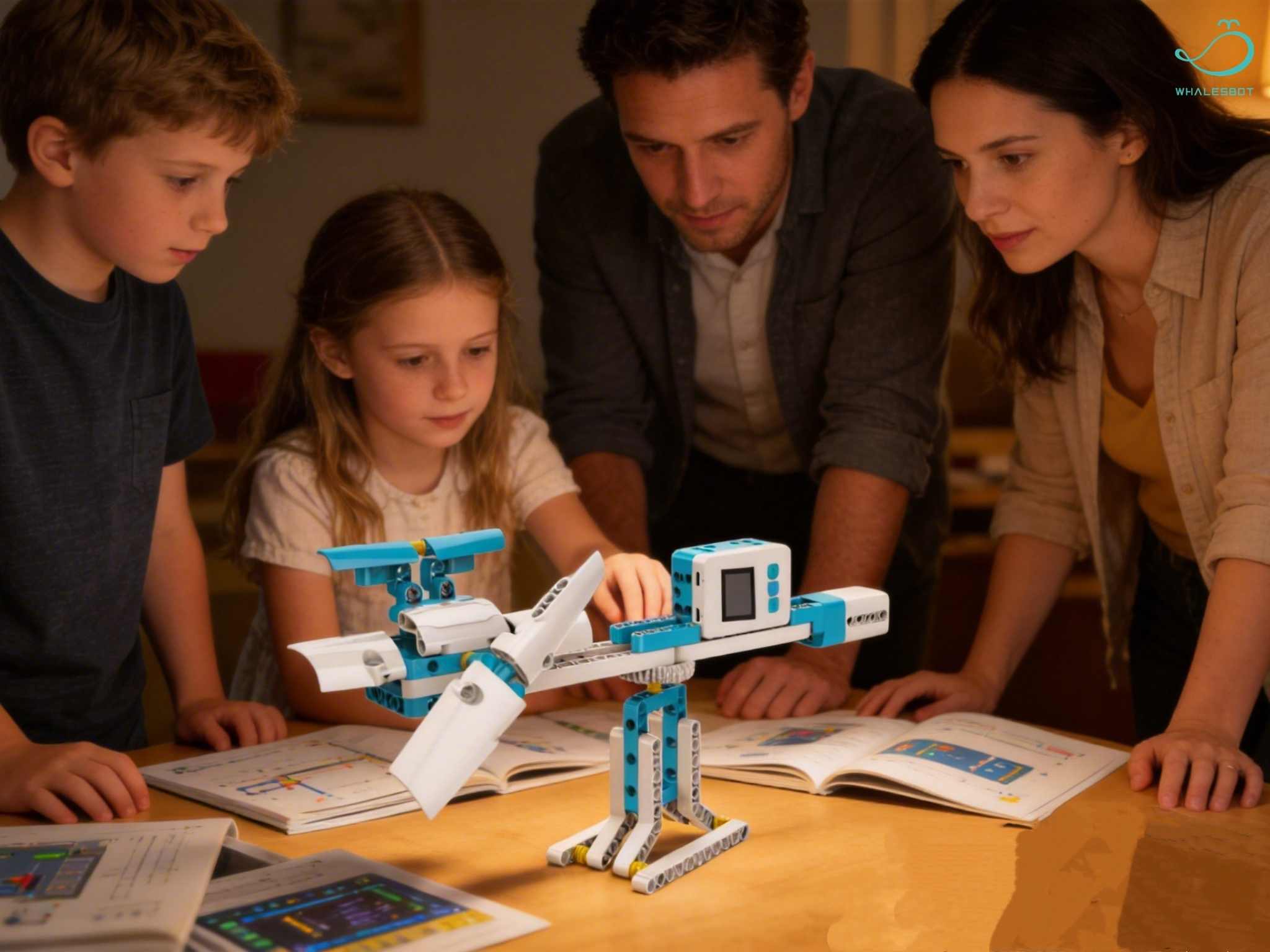
Before students can understand artificial intelligence systems, they must understand how systems operate. This is why robotics kits for schools play a central role in modern STEM education strategies.
Robotics provides hands-on environments where students learn how:
Code produces measurable output
Conditional logic influences system behavior
Iterative debugging improves performance
Optimization strengthens results
These structured problem-solving skills are foundational for AI comprehension.
Within STEM education programs, robotics kits for schools serve as an early stage of AI preparation. They cultivate the cognitive habits required for later AI curriculum development.
Structured Programming as the Bridge Between STEM and AI
Programming progression is essential in any AI curriculum.
AI systems rely heavily on programming languages such as Python. However, successful implementation within STEM education requires gradual progression rather than immediate complexity.
A strong AI curriculum may begin with visual programming tools that reinforce logical sequencing. It then transitions into Python to introduce scalable syntax and algorithmic structure. Exposure to C programming further strengthens system-level precision and computational discipline.
The WhalesBot Smart Series supports this structured approach within STEM education environments. The S40 model, designed for learners aged 7 and above, extends this pathway by supporting Scratch, Python, and C programming within a unified robotics platform.
By integrating multi-language coding within robotics-based STEM education, schools create programming fluency that supports long-term AI curriculum goals.
The purpose is not to present robotics tools as AI systems, but to use structured STEM education to build the programming and systems thinking that AI requires.
Moving From AI Tools to AI Curriculum Architecture in 2026
The major AI education trend in 2026 is structural integration within STEM education.
Schools are recognizing that:
AI software evolves rapidly
Foundational STEM skills remain stable
Curriculum alignment determines sustainability
Instead of adding AI as a separate initiative, institutions are embedding AI readiness into structured STEM education pathways. Robotics kits for schools, progressive coding curriculum, and intentional AI curriculum design work together to create scalable implementation models.
This shift allows schools to prepare students not only to interact with AI systems, but to understand the computational logic behind them.
Building Sustainable Schooling for AI Through STEM Education
Effective schooling for AI requires clarity of progression, teacher readiness, and integration across STEM departments.
When robotics education, structured programming, and AI curriculum planning are aligned within STEM education, institutions establish a stable foundation for long-term innovation.
In 2026, the schools that succeed in AI in K-12 education will be those that strengthen STEM education as the core engine of AI readiness.
.webp)

.png)