.png)


As technology becomes a bigger part of everyday life, more parents, educators, and schools are paying attention to educational robotics for children. They are not only looking for fun technology experiences, but also for meaningful ways to support STEM learning for children, creativity, and real-world problem-solving. That is one of the reasons the benefits of educational robotics are becoming more widely recognized in schools, after-school programs, and home learning environments. Instead of using technology passively, children can build, test, program, and interact with real systems. This makes robotics for kids much more than a trend. It becomes a powerful form of hands-on STEM education. Educational robotics helps children develop technical understanding, confidence, persistence, and teamwork. It also creates a strong early connection between play, learning, and innovation. Here are 10 important benefits of educational robotics for children.
1. Educational Robotics Helps Children Build Problem-Solving Skills
One of the biggest benefits of educational robotics is how naturally it develops problem-solving skills. When children work with robots, the result does not always work perfectly the first time. A build may not move as expected. A sensor may not respond the right way. A sequence may need to be adjusted. Through this process, children learn to observe, test, and improve. They begin asking useful questions:
- What went wrong?
- What should I change?
- Which part is causing the problem?
- What can I test next?
This is one of the reasons educational robotics for children is so valuable. It teaches children to break challenges into smaller parts and search for solutions step by step. These problem-solving habits are useful not only in robotics in education, but also in math, science, and everyday learning.
2. Educational Robotics Strengthens Logical and Computational Thinking
Another major advantage of robotics for kids is that it strengthens logical thinking and supports computational thinking for kids. When children build or program robots, they begin to understand that every action follows a rule. If one input changes, the output changes. If a condition is met, the robot responds in a certain way. This helps children understand sequencing, patterns, conditions, and cause-and-effect relationships. That is why coding and robotics work so well together. Educational robotics gives children a concrete way to understand the logic behind digital systems. Instead of only hearing about instructions and commands, they can see those rules come to life through movement, light, sound, and interaction. For schools looking to improve STEM learning for children, this is one of the most important educational benefits.
3. Educational Robotics Makes STEM Learning More Engaging for Children
Many STEM topics can feel abstract when they are taught only through explanation or worksheets. One of the strongest benefits of educational robotics is that it makes those ideas more engaging and easier to understand. With educational robotics for children, STEM concepts become visible and interactive. Children do not just hear about motion, energy, logic, or engineering. They build something, test it, and observe how it behaves. This makes hands-on STEM education much more effective. Children are more likely to stay curious when they can directly interact with what they are learning. That is why robotics in education is becoming more important in classrooms that want to make STEM more active, practical, and memorable.
4. Educational Robotics Encourages Creativity Alongside Technical Learning
People often associate robotics with mechanics and logic, but educational robotics for children also supports creativity in powerful ways. Children can build different models, try out new functions, redesign their projects, and explore their own ideas. A robotics activity is not always about reaching one fixed answer. In many cases, children can imagine multiple solutions and express their creativity through how they build and test. This is one of the reasons robotics for kids is so valuable in modern learning. It combines structure with imagination. Children are not only learning technical skills. They are also learning how to create with technology. For educators interested in stronger STEM learning for children, this balance between engineering and creativity is especially important.
5. Educational Robotics Builds Confidence Through Hands-On Achievement
One of the most visible benefits of educational robotics is the confidence children gain when they see something they built actually work. There is a big difference between reading about how technology works and building a robot that moves, responds, or completes a task. That moment of success helps children feel capable and motivated. With hands-on STEM education, success feels tangible. Children can see the direct result of their ideas and effort. This makes educational robotics for children especially meaningful for learners who respond well to active and visual experiences. As children continue working with robotics in education, they often become more willing to take on challenges, try new ideas, and trust their own ability to solve problems.
6. Educational Robotics Teaches Persistence and Resilience
Another important reason to value robotics for kids is that it teaches persistence. Robotics activities often include trial and error. A build may need to be adjusted. A coding sequence may not work immediately. A robot may need to be tested several times before it performs correctly. This helps children understand that progress is often the result of patience and improvement. That lesson is one of the most practical benefits of educational robotics. Children learn that mistakes are not the end of the process. They are part of learning. This makes educational robotics for children especially useful in helping students develop resilience, which supports long-term learning in both STEM and non-STEM subjects.
7. Educational Robotics Supports Teamwork and Communication
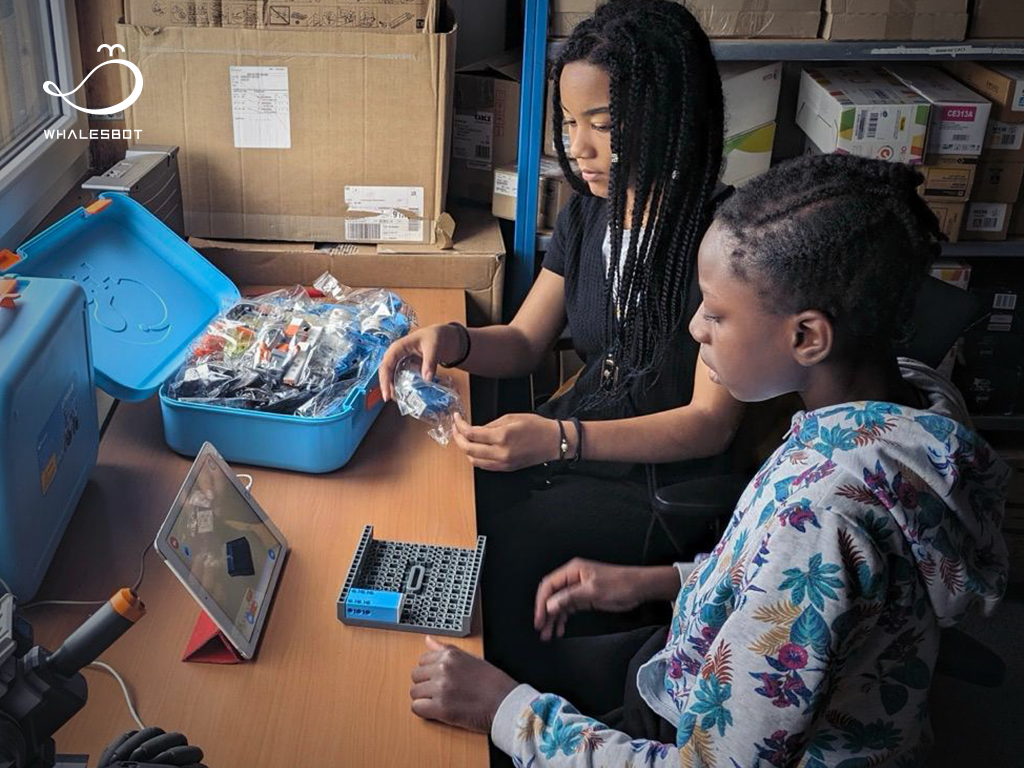
Many robotics in education activities work best when children collaborate. They build together, discuss ideas, divide tasks, and solve problems as a team. This means educational robotics for children also supports communication and teamwork. Children learn how to explain their ideas, listen to others, make shared decisions, and combine different strengths in one project. For example, one child may focus on building, another may work through the logic, and another may help test the robot. This makes hands-on STEM education not just a technical experience, but also a social one. That is one of the less obvious but equally valuable benefits of educational robotics.
8. Educational Robotics Connects STEM Learning to the Real World
Children are surrounded by technology, but they do not always understand how it works. One of the strengths of educational robotics for children is that it helps connect classroom learning to real-world systems. Through robotics for kids, children begin to notice how sensors, automation, movement, and digital logic appear in everyday life. They may start to think differently about smart devices, automatic doors, traffic systems, machines, and other technologies around them. This makes STEM learning for children feel more relevant. Instead of seeing science and technology as distant school subjects, children begin to understand that these ideas shape the world they live in. That real-world connection is one of the reasons robotics in education has such strong long-term value.
9. Educational Robotics Creates a Strong Foundation for Coding and Future Technology Learning
A major reason many schools invest in coding and robotics is that robotics creates a strong early foundation for future learning. Before children move into more abstract digital concepts, educational robotics for children helps them understand how instructions shape behavior, how conditions influence outcomes, and how systems can be controlled and improved. This supports future learning in:
- coding
- computer science
- engineering
- electronics
- automation
- AI-related topics
that is why robotics for kids is often seen as one of the best early pathways into technology education. It introduces children to the logic behind digital systems in a more concrete and accessible way. For example, the WhalesBot AI Module 3s offers a hands-on robotics learning experience for children aged 8+. With 323+ structural parts, a range of sensors, and programming support for Scratch, C, and Python, it helps children explore building, coding, and problem-solving in a more interactive way. This makes educational robotics more accessible, engaging, and meaningful for young learners.
10. Educational Robotics Turns Children From Technology Users Into Technology Creators
Perhaps the most important of all the benefits of educational robotics is that it changes the role children play in relation to technology. Many children spend time using apps, devices, and digital platforms created by others. But educational robotics for children gives them the chance to do something deeper. It gives them the opportunity to build, test, design, and create. This shift matters. It helps children understand that technology is not only something to consume. It is something they can shape. That is one of the most powerful outcomes of hands-on STEM education. Children begin to see themselves not just as users of technology, but as makers, thinkers, and creators.
Why Educational Robotics Matters in Modern Education? As schools and families continue looking for better ways to support STEM learning for children, the value of robotics in education is becoming clearer. Educational robotics combines creativity, experimentation, logic, and collaboration in one learning experience. It supports both technical development and broader learning habits such as confidence, resilience, and curiosity. That is why educational robotics for children is becoming such an important part of modern education. It does not simply teach children how robots work. It helps them understand systems, solve problems, and learn through doing.
Final Thoughts
The benefits of educational robotics go far beyond the robot itself. Educational robotics helps children build problem-solving skills, strengthen logical thinking, improve collaboration, and develop a deeper connection to technology. For parents and educators looking for meaningful STEM learning for children, educational robotics for children offers much more than technical exposure. It supports creativity, confidence, coding readiness, and real-world understanding—making robotics for kids an increasingly valuable part of education in 2026. In the end, the true value of hands-on STEM education is not only what children build. It is what they learn about their own ability to think, create, test, and grow.