



As AI becomes part of how people work, create, analyze information, and solve problems, schools are facing a new question: what AI career skills should students start building before they enter the workforce?
These skills are not only for future AI engineers or data scientists. In an AI-enabled future, students will need data awareness, computational thinking, AI literacy, critical evaluation, communication, collaboration, and responsible decision-making to work with technology, question results, and turn ideas into real outcomes.
In this article, we’ll explore why AI career skills matter, what skills schools should focus on, and five practical ways educators can help students build them through classroom learning, hands-on STEM, and real-world AI projects.
Why Do AI Career Skills Matter Now?
These skills matter because the future of work is already changing. According to the World Economic Forum’s Future of Jobs Report 2025, 86% of employers expect AI and information processing technologies to transform their business by 2030, while AI and big data, networks and cybersecurity, and technological literacy are among the fastest-growing skills. The same report also notes that 39% of workers’ core skills are expected to change by 2030.
For schools, this sends a clear signal: students need more than basic digital familiarity. AI literacy is now understood as a set of knowledge, skills, and attitudes that helps learners understand AI systems, critically evaluate their outputs, and use them ethically and creatively. Building AI career skills is therefore not just about preparing students for technical jobs. It is about helping them adapt, think critically, solve problems, and create responsibly in an AI-shaped future.
What AI Career Skills Do Students Need?
AI career skills for students include both technical foundations and human skills that become more important in AI-enabled work. Looking at both AI literacy goals and workforce skill trends, schools can focus on two connected skill areas.
1. AI-Ready Technical Skills
· Data literacy: Future roles will require students to make decisions with data, so they need to collect, organize, compare, and question data before using it as evidence.
· Computational thinking: When students break complex problems into patterns, steps, rules, and testable processes, they build the logic needed to work with automated systems.
· Programming basics: Even with AI-assisted coding, students benefit from understanding sequences, conditions, loops, variables, and basic logic so they can guide and troubleshoot technology.
· Technological literacy: As digital tools continue to change, students need the confidence to use, evaluate, and adapt to new technologies in different work and learning contexts.
· AI literacy: A strong foundation in AI helps students understand what AI can do, how outputs are generated, and where human judgment is still needed.
2. Human Skills for AI-Enabled Work
· Analytical thinking: As AI makes answers easier to generate, students need to compare evidence, identify weak reasoning, and decide what is actually worth trusting.
· Adaptability and resilience: Future work will keep changing with new tools, so students need to revise ideas, learn from failed attempts, and keep improving.
· Communication and collaboration: Students need to explain AI-supported ideas clearly, listen to others, and turn technical possibilities into shared outcomes.
· Ethical reasoning: Students should learn when AI should be used, questioned, limited, or guided by human responsibility, especially when decisions affect privacy, fairness, and people in real-world contexts.
Together, these skills help students move beyond simply using AI. They prepare students to understand AI, work with it critically, and apply it responsibly in future learning and career contexts.
How Can Schools Help Students Build AI Career Skills?
These skills are built through repeated practice, not one-time activities. Schools need to help students move from understanding AI concepts to applying them through real tasks, projects, and responsible decision-making.
1. Build an AI Learning Pathway
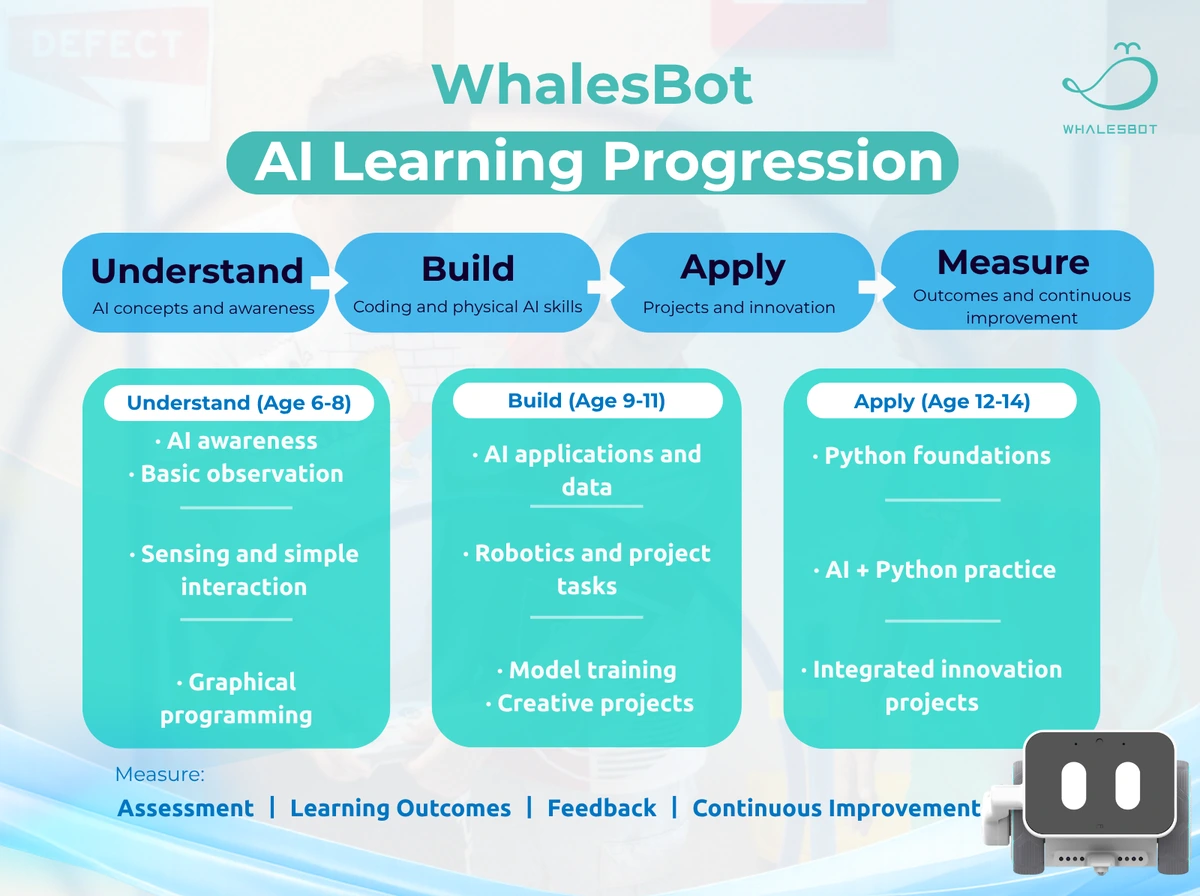
AI learning works better when it follows a clear progression, instead of being taught as isolated lessons. WhalesBot’s AI learning progression follows a similar approach, connecting AI awareness, coding, robotics, data, model training, and project-based innovation across different age groups.
In practice, schools can:
· For ages 6–8, start with AI awareness, basic observation, sensing, simple interaction, and graphical programming.
· For ages 9–11, introduce AI applications, data, robotics tasks, project-based activities, and simple model training.
· For ages 12–14, move into Python foundations, AI + Python practice, and integrated innovation projects.
· Across all stages, use assessment, feedback, and learning outcomes to support continuous improvement.
Skills built:
AI literacy, computational thinking, programming foundations, data awareness, project-based problem-solving, and technical confidence.
2. Use Data Tasks to Build AI-Ready Thinking
Students do not need to start with advanced AI tools to build AI-ready skills. Simple data tasks can help them observe information, find patterns, compare results, and use evidence before making decisions. These habits matter in AI-enabled work because AI systems and AI-related tasks often depend on data, logic, and ongoing improvement.
In practice, schools can:
· Ask students to collect and organize simple data from experiments, surveys, classroom observations, or sensors.
· Guide students to compare results, find patterns, and check whether the data supports a clear conclusion.
· Connect data tasks with real-world questions, such as how evidence can support better decisions.
Skills built:
Data literacy, computational thinking, analytical thinking, problem-solving, adaptability, and technical confidence.
3. Let Students See AI in the Physical World
Students understand AI more clearly when they can see how robotics, coding, and automation work beyond the screen. Demos, hands-on tools, and real-world visits can help students connect abstract technology concepts with visible, practical applications.
In practice, schools can:
· Use demos, videos, and multimedia examples to show how AI, robots, drones, sensors, or smart systems work in real life.
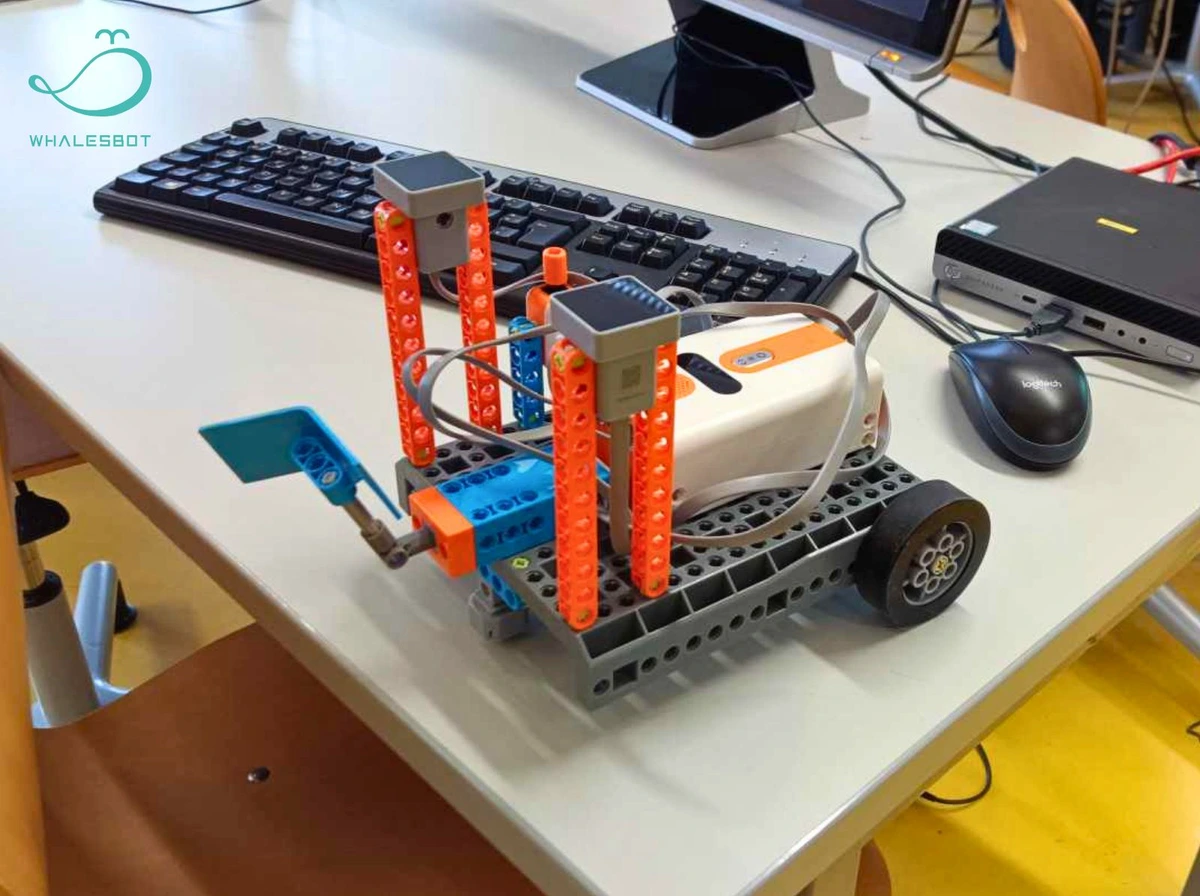
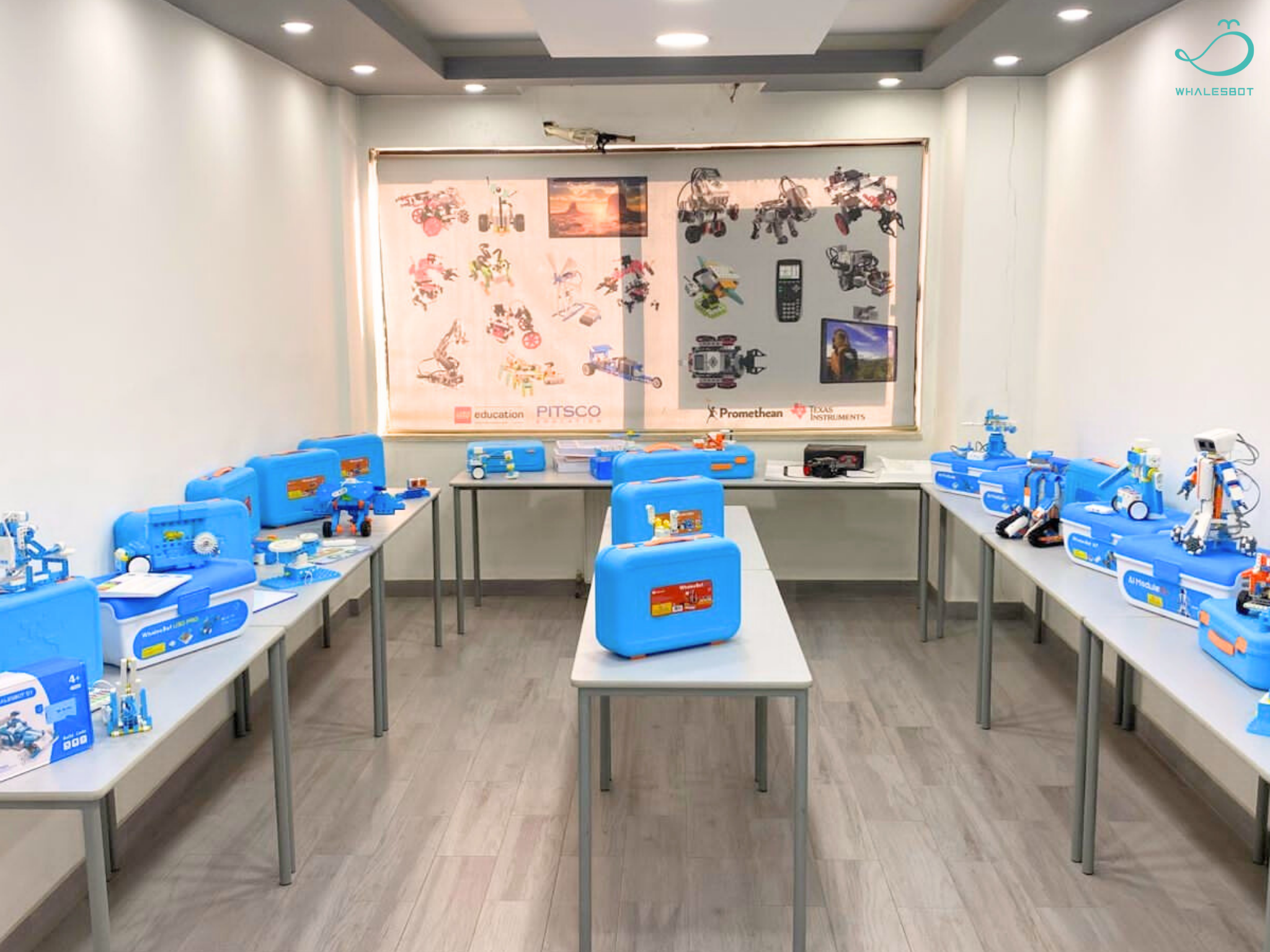
· Bring programmable robots into the classroom, such as WhalesBot robots, so students can explore how coding, sensors, AI vision, and movement connect.
· Organize visits to science museums, AI labs, robotics exhibitions, or smart factories to help students see real-world applications of AI and automation.
Skills built:
Technological literacy, AI literacy, programming basics, observation, and technical confidence.
4. Turn AI and Robotics Learning Into Collaborative Projects
Technical learning becomes more career-ready when students use technology to solve problems with others. Classroom projects, clubs, and competitions give students chances to plan, build, test, explain, and improve their ideas in a more realistic learning environment.
In practice, schools can:
· Set classroom project assignments around real-world themes, such as smart campus, smart logistics, smart factory, or environmental monitoring.
· Let students work in teams with clear roles, such as coding, building, testing, presenting, or documenting the project.
· Build school robotics clubs or maker programs where students can keep developing ideas beyond regular lessons.
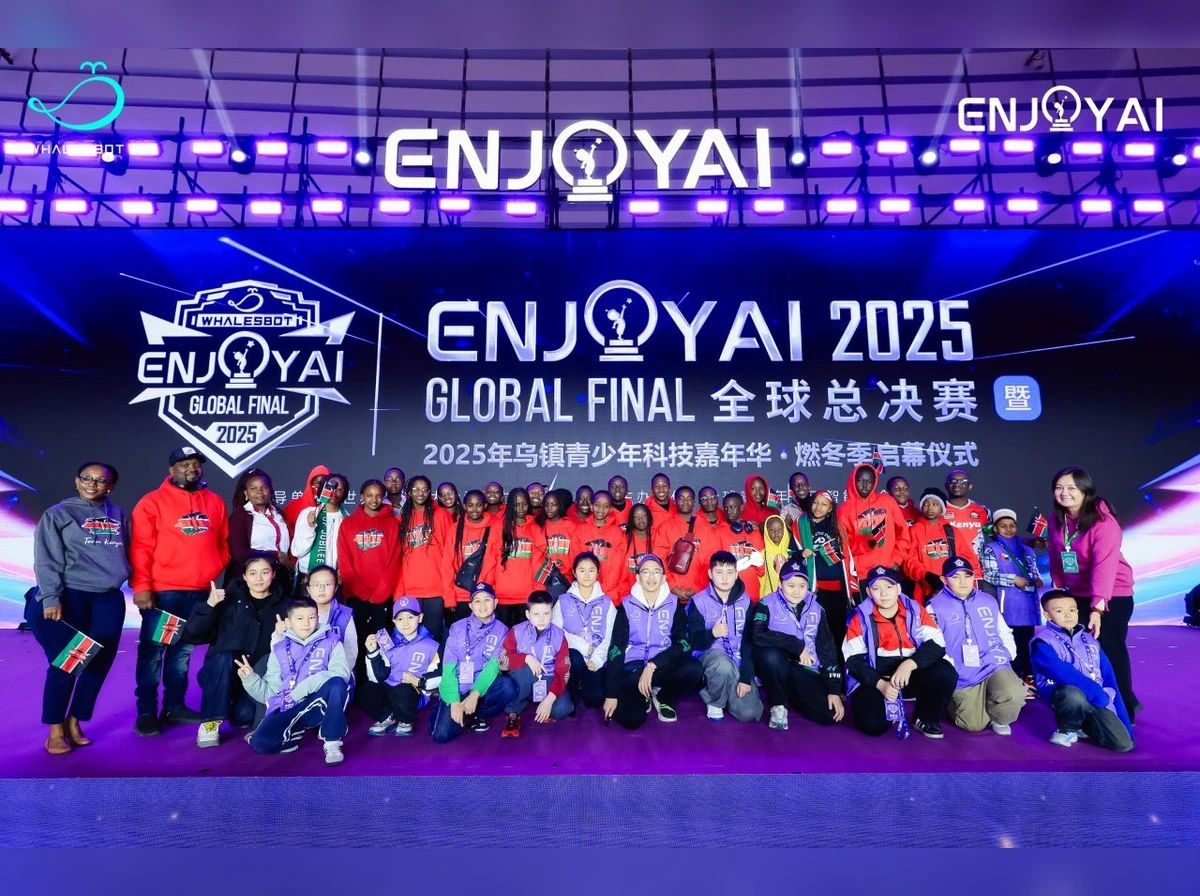
· Encourage students to join robotics competitions, such as ENJOY AI, where they can apply technical skills through challenges, teamwork, and problem-solving.
Skills built:
Communication, collaboration, creativity, problem-solving, adaptability, project management, and technical confidence.
5. Keep AI Evaluation and Ethics at the Center
Students should not learn AI by accepting its answers too quickly or using it without considering its impact. AI career skills also include knowing how to check AI outputs, question bias, protect privacy, and decide when human judgment should guide or limit AI use.
In practice, schools can:
· Ask students to compare AI-generated answers with trusted sources.
· Let students identify missing information, weak reasoning, possible inaccuracies, or biased results, then revise the output and explain their changes.
· Discuss privacy, fairness, responsibility, and the human impact of AI-powered decisions.
· Add short reflection questions such as: “What did AI get right?”, “What needs checking?”, “Who might be affected?”, and “When should humans stay in control?”
Skills built:
Critical evaluation, analytical thinking, ethical reasoning, communication, AI literacy, and responsible decision-making.
Building Future-Ready Classrooms
AI career skills grow when students can understand AI, work with data, build with technology, solve problems with others, and think responsibly about how AI should be used.
For schools, the next step is to turn AI learning into structured, hands-on experiences that connect classroom concepts with real-world practice. WhalesBot helps schools bring this to life through AI and robotics learning solutions built for coding, projects, competitions, and classroom implementation.
Explore how WhalesBot helps schools build hands-on AI and STEM learning experiences for future-ready classrooms:https://www.whalesbot.ai/

.png)