

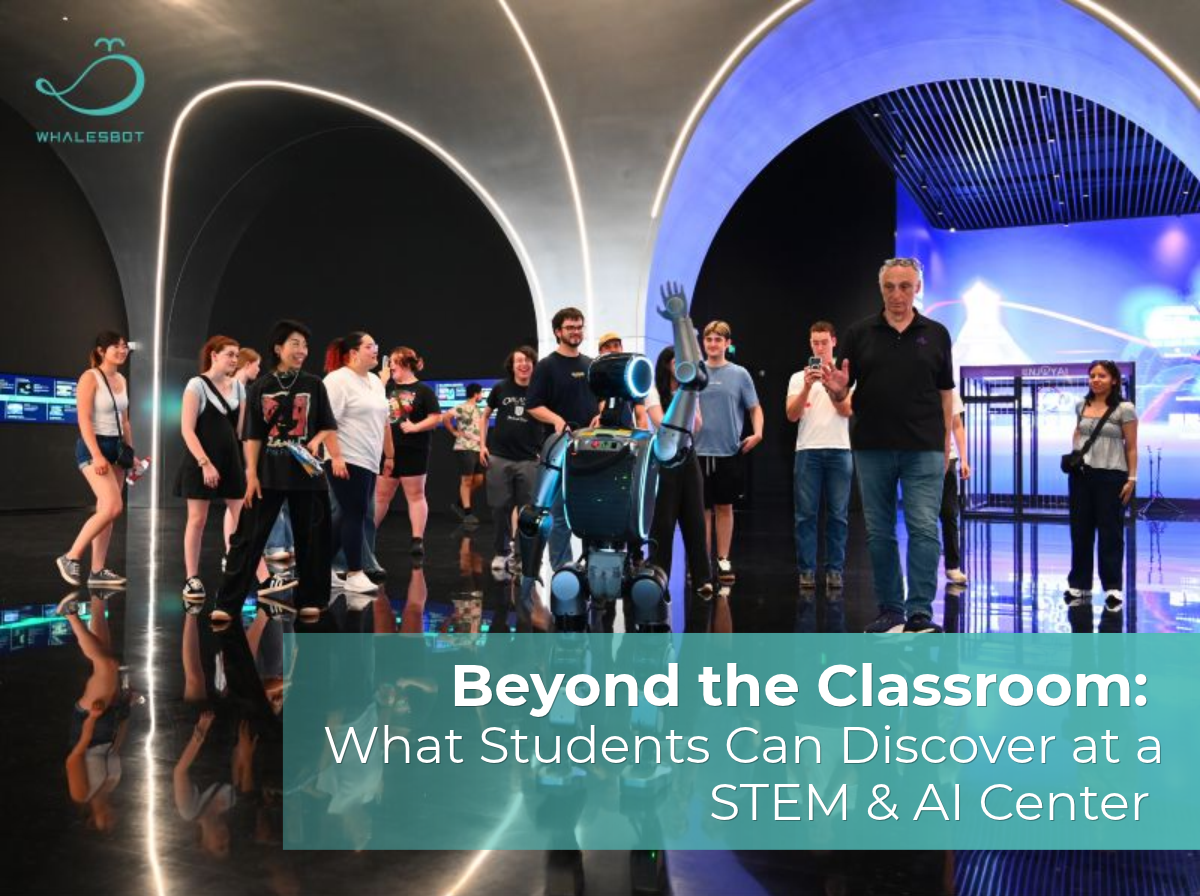


Every discovery begins with a moment of curiosity.
Over the past year, WhalesBot STEM & AI Center has welcomed visitors from more than ten countries, including students from the United States, school principals from Malaysia, higher education representatives from Brazil, and delegations from Australia, Spain, Vietnam, and beyond. Despite their different ages, cultures, and backgrounds, they share a curiosity about technology and the future of education.
The WhalesBot STEM & AI Center turns this curiosity into hands-on experiences through interactive technology, practical activities, and structured learning. This article explores what makes the center more than a technology exhibition, what students can gain from these experiences, and how WhalesBot hopes to bring such opportunities to more communities worldwide.
From First Encounters to Future Possibilities
“I think it's really cool!” That's how a student from the United States described the experience after playing Chinese chess with a robot at the WhalesBot STEM & AI Center. And this excitement was shared by many of the visiting students, each discovering something different that captured their imagination.
For some, it was a drone that sparked ideas about how technology could be used in everyday life. For others, a brain-controlled experience offered a glimpse of what emerging technologies can do. One student was particularly impressed by how robots could sometimes “outsmart us in ways that we wouldn't have thought of.”
But the students' curiosity went beyond the exhibits themselves. When asked about the future of AI, one student imagined how it could contribute to medical advancements, new forms of robotics, and improvements in people's lives. Their experiences became opportunities not only to interact with technology, but also to imagine where it might lead.
Inside the WhalesBot STEM & AI Center: More Than a Science Museum
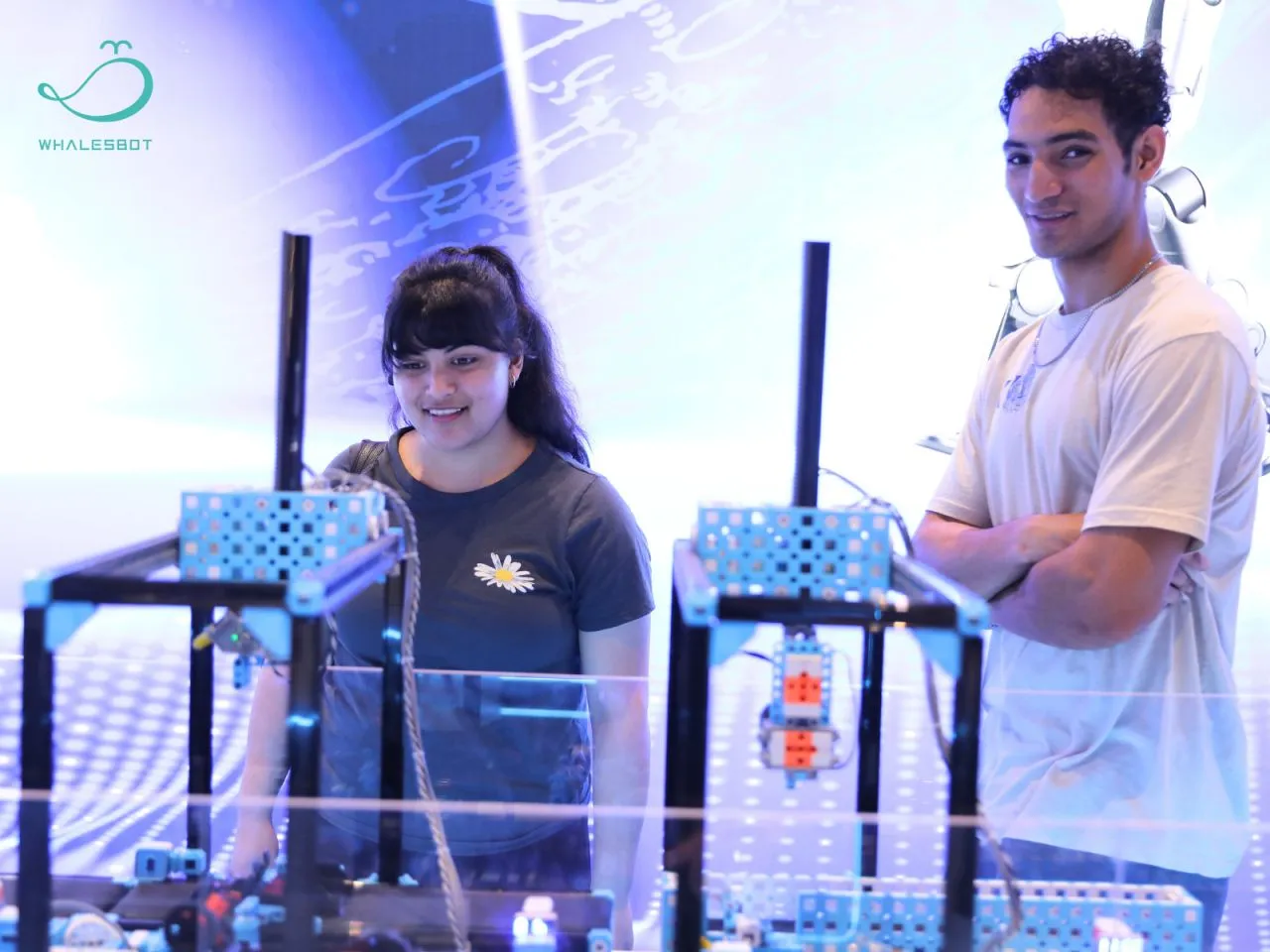
Behind these moments of discovery is a space designed for more than technology displays. Built around four complementary experiences, Play, Learn, Compete, and Explore, the WhalesBot STEM & AI Center offers different ways for students to engage with technology, from interactive exhibits to hands-on learning and real-world applications.
Play | Interactive Technology Experiences: From playing chess against an AI robot to brain-controlled racing and interactive robotics exhibits, visitors can experience technology firsthand. These activities make complex concepts more tangible, accessible, and fun.
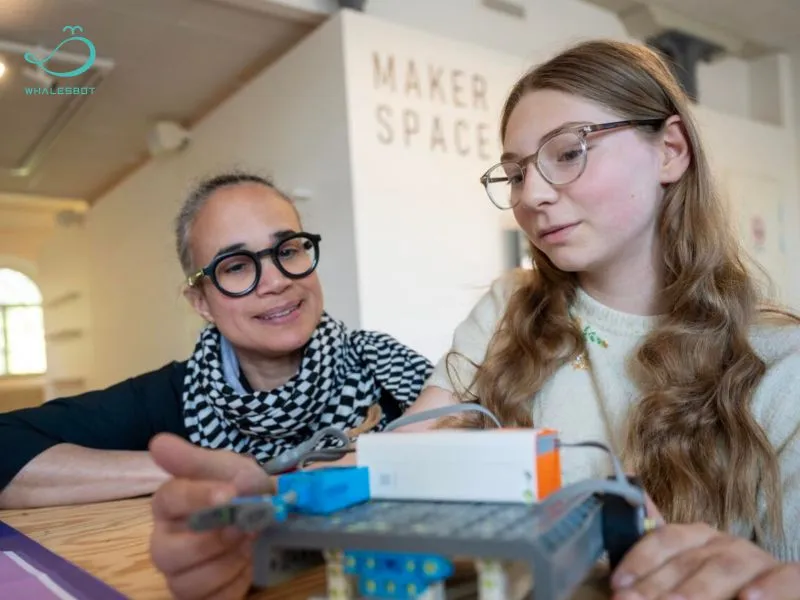
Learn | Structured Courses & Hands-On Projects: Guided workshops and age-appropriate learning programs offer opportunities to build, code, and experiment with robots, helping students connect AI, programming, and engineering concepts with practical applications.
Compete | Robotics Challenges & Teamwork: Interactive robotics games and challenge-based activities introduce an element of friendly competition. Participants can test strategies, tackle challenges, and collaborate with peers while learning through trial and error.
Explore | Real-World Technology & Innovation: Study tours can extend to WhalesBot's smart manufacturing facilities in Shanghai, where visitors can see how educational robots are produced and assembled, connecting technology learning with real-world engineering.
Together, these experiences allow students to engage with STEM and AI in different ways. Some may discover a new interest through an interactive exhibit, while others can take their learning further through coding, robotics projects, and collaborative challenges.
What Students Really Gain
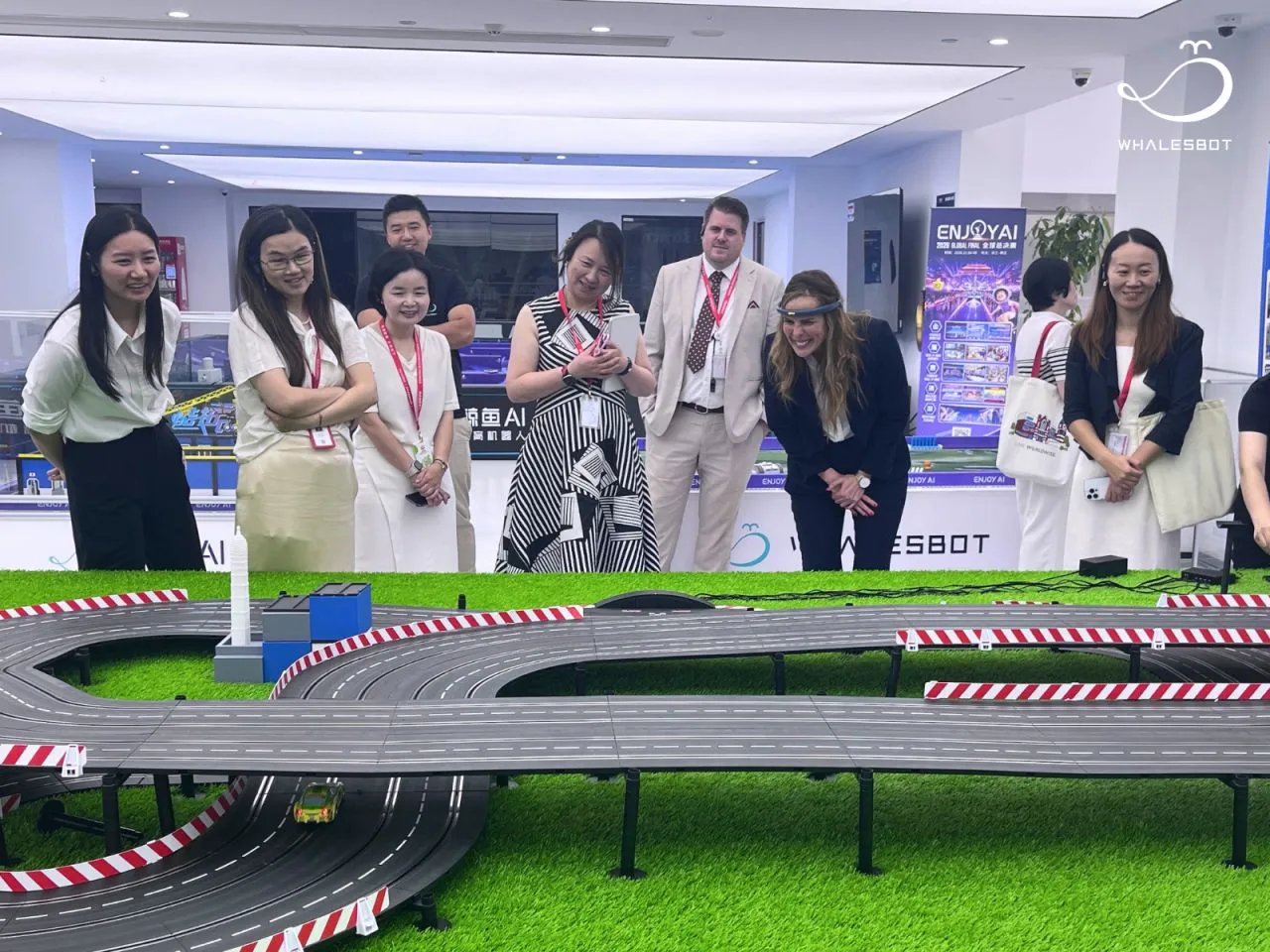
“When students get to explore technology for themselves, their curiosity naturally grows. They start asking questions, trying new ideas, and discovering what they can do with what they've learned,” shared a visiting educator after exploring the WhalesBot STEM & AI Center.
These hands-on experiences can help students discover new interests and develop skills beyond technical knowledge:
Curiosity & Continued Exploration: An interactive experience can introduce students to an unfamiliar field or inspire a new interest. Through structured courses, hands-on projects, and ENJOY AI robotics competitions, the WhalesBot STEM & AI Learning Ecosystem provides opportunities to explore these interests further.
Technical Understanding & Problem-Solving: Building and programming robots helps students see how code, sensors, and mechanical systems work together. When something doesn't work as expected, students can investigate the problem, adjust their approach, and try again, developing technical understanding alongside patience and persistence.
Creativity, Confidence & Collaboration: Open-ended projects encourage students to experiment with their own ideas, while team activities give them opportunities to communicate, share decisions, and work toward common goals. Seeing their ideas take shape can also help students build confidence in their ability to create with technology.
Students may connect with technology in different ways, from coding and engineering to creative design and robotics. The WhalesBot STEM & AI Center gives them room to discover what interests them most.
Opening Doors to STEM Learning Around the World
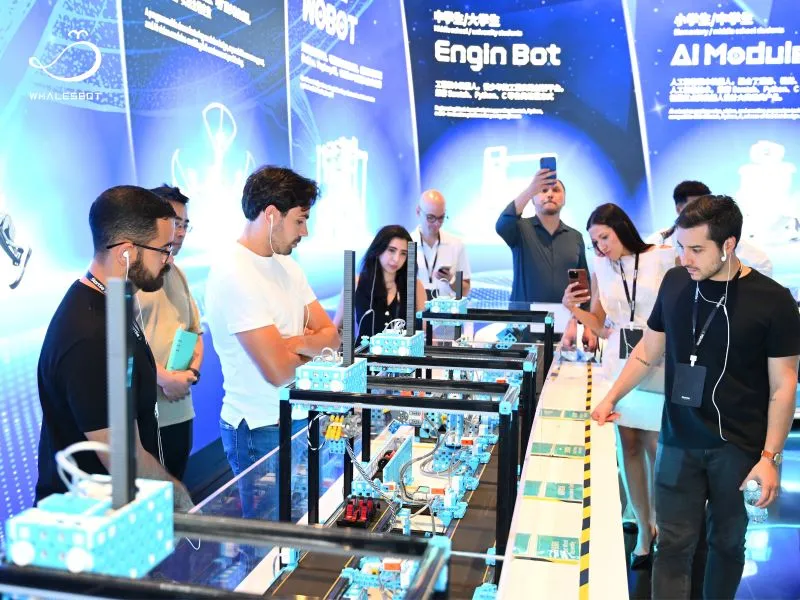
The experiences offered at the WhalesBot STEM & AI Center reflect a broader belief: meaningful STEM learning should be accessible to more students, wherever they are.
Around the world, WhalesBot's local partners are putting this belief into practice in different ways, bringing robotics and hands-on learning into schools, communities, and educational programs.
In Kenya, WhalesBot's local partner, Code With Kids, traveled 10 hours overnight to bring a full day of STEM and robotics learning to 200 students from 14 schools. Many had never experienced robotics before. What might seem like an ordinary learning activity elsewhere became a rare opportunity for these students to discover, experiment, and imagine what they could create with technology.
In Sweden, STREAM Scandinavia is helping younger children discover robotics through play. In Landskrona, students build, program, and test robots together, learning through trial and error. These early experiences encourage children to see technology as something they can understand and shape for themselves.
For Angie Sewell, a student from an all-girls secondary school in Ireland, robotics also became a source of confidence. Despite encountering stereotypes about girls in STEM, she gained the confidence to build, code, and compete, eventually joining an international robotics event in Beijing alongside students from 21 countries. As Angie put it, “One robot may inspire one student. One student may inspire an entire school.”
These stories reflect the same belief behind the WhalesBot STEM & AI Center: every student deserves opportunities to explore technology, discover their potential, and see a place for themselves in the future of STEM and AI.
The Future: Making STEM & AI Learning More Accessible
Today, WhalesBot's broader STEM & AI learning ecosystem reaches 81+ countries and regions, serving more than 30,000 schools worldwide. Behind these numbers are educators and local partners working to bring robotics, coding, and AI learning to more students.
Yet access to hands-on STEM education remains uneven. While some students encounter robotics at an early age, others may have few opportunities to experience it firsthand.
Looking ahead, WhalesBot hopes to work with more local partners to bring the WhalesBot STEM & AI Center to communities around the world, creating learning spaces that respond to local needs and offer more opportunities to explore, learn, and create.
Beyond opening new centers, the goal is to make meaningful STEM & AI learning more accessible. With the support of educators, communities, and local partners, more students can have the opportunity to discover technology, develop their interests, and see what they are capable of creating.
Imagine a space like this in your community.
Explore the possibilities with WhalesBot: https://www.whalesbot.ai/


